
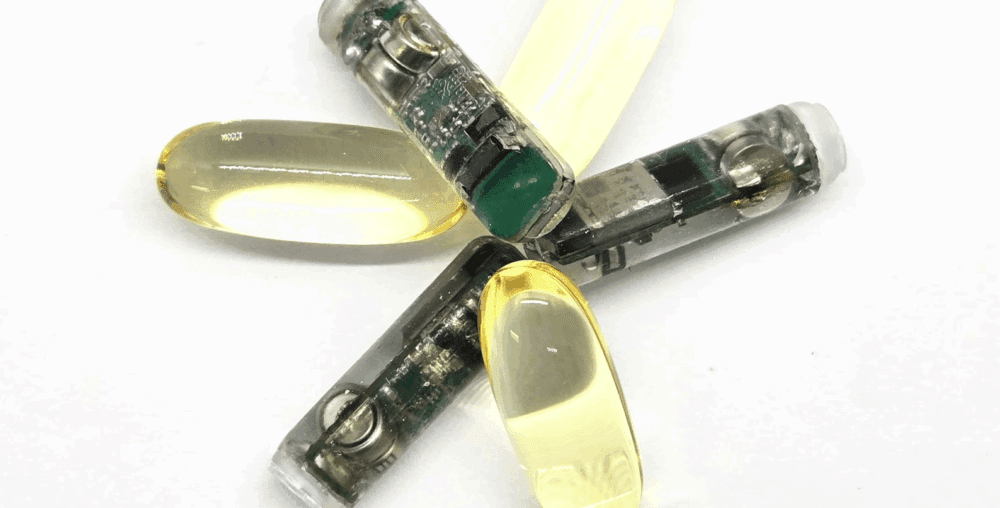
Scientists at Caltech have developed a new “smart capsule” named PillTrek, designed to profile metabolic and molecular information directly from the gastrointestinal (GI) tract. The GI tract is increasingly recognized for its comprehensive role in overall health, extending beyond digestion to include the production of hormones, immune cells, and neurotransmitters. This involvement means the GI tract hosts various biomarkers critical for identifying, monitoring, and treating diseases, from indicators of metabolic syndrome like short-chain fatty acids to inflammation biomarkers such as cytokines.
Current methods for evaluating GI tract information, such as fecal analysis or biopsies, are invasive, costly, and do not offer real-time, continuous profiling. PillTrek addresses these limitations by incorporating simple, inexpensive sensors within a miniature wireless electrochemical workstation, utilizing low-power electronics. The capsule measures 7 millimeters in diameter and 25 millimeters in length, making it smaller than commercially available capsule cameras used for endoscopy, while providing a range of electrochemical measurement capabilities.
Wei Gao, professor of medical engineering at Caltech and a Heritage Medical Research Institute Investigator, commented, “We designed this pill to be a very versatile platform. From an electrochemical-sensing point of view, it is very powerful. It has the ability to measure metabolites, ions, hormones such as serotonin and dopamine, possibly even proteins as well. And all within the gut, which is a complex environment.”
The details of the capsule are described in a new paper published in the journal *Nature Electronics*. The lead authors of the paper are Jihong Min, a postdoctoral scholar fellowship trainee in medical engineering at Caltech, and Hyunah Ahn, a visitor in medical engineering at Caltech and graduate student at the Korea Advanced Institute of Science and Technology (KAIST).
In a proof-of-concept study, PillTrek was used in animal models to measure pH, temperature, and changing levels of glucose and the neurotransmitter serotonin.
Gao highlighted the reconfigurable nature of the electrochemical workstation within the capsule, allowing different sensors to be easily swapped to measure various parameters in the gut. His team had previously developed a technique for 3D printing inexpensive sensors on plastic substrate sheets, a method that can be applied to mass-produce sensors for PillTrek.
Looking ahead, Gao is collaborating with co-author Azita Emami, the Andrew and Peggy Cherng Professor of Electrical Engineering and Medical Engineering at Caltech, to explore wireless power transfer and even smaller electronics to further reduce PillTrek’s size and power consumption.
Emami, who is also director of the Center for Sensing to Intelligence, stated, “Ingestible capsules have significant potential in diagnosis, monitoring, and management of chronic conditions, but previous devices were very limited in terms of their sensing capabilities, lifetime, and size. This work is an important translational step toward devices that can provide meaningful medical information for patients and physicians.”
Additional authors of the paper include Heather Lukas, Xiaotian Ma, Rinni Bhansali, Sung-Hyuk Sunwoo, Canran Wang, Yadong Xu, Dickson R. Yao, and Gwangmook Kim of Caltech, along with Zhaoping Li and Tzung K. Hsiai of the David Geffen School of Medicine at UCLA, and Hee-Tae Jung of KAIST.
The research received funding support from the National Science Foundation, the National Institutes of Health, the American Cancer Society, the Army Research Office, the US Army Medical Research Acquisition Activity, the National Research Foundation of Korea, the Heritage Medical Research Institute, and the KAIST-UC Berkeley-VNU Global Climate Change Research Center. The Kavli Nanoscience Institute at Caltech also provided critical support and infrastructure.